

Discovering a puddle of water at the base of your water heater is an unwelcome surprise. A leak can signal anything from a simple fix to a major system failure.
While any leak should be taken seriously, its source determines the best course of action. It could be a minor issue with a valve or a more serious problem like a corroded tank. This guide explains the common reasons why your water heater might be leaking and what you should do next.
What to Do First When You Find a Leak
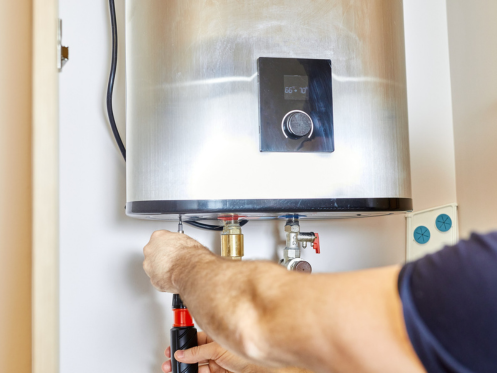
Before you diagnose the problem, take immediate safety precautions to prevent water damage or potential hazards. First, shut off the water supply to the tank. You can usually find a shutoff valve on the cold water pipe leading into the top of the water heater. Turn it clockwise to stop the flow of water.
Next, cut the power to the unit. For an electric water heater, find the corresponding breaker in your home’s electrical panel and switch it off. For a gas model, turn the thermostat knob on the unit to the “off” position. These steps make the situation safer while you identify the source of the leak.
Common Causes of a Water Heater Leak
Once the area is safe, you can look for the source of the water. Even if the puddle is at the bottom, the leak could originate from several components.
A Faulty Drain Valve
At the bottom of your water heater, there is a drain valve used for routine flushing and maintenance. Over time, this valve can become loose, or its internal washer can degrade, causing a slow drip or a steady leak. In some cases, simply tightening the valve might solve the problem. However, if the valve itself is cracked or worn out, it will need to be replaced by a professional.
Temperature and Pressure (T&P) Relief Valve
The T&P valve is a critical safety feature that releases water if the temperature or pressure inside the tank gets too high. This valve is usually located on the side or top of the tank with a discharge pipe running down toward the floor. A discharging T&P valve can indicate a serious pressure problem that requires immediate professional attention, as water pooling at the base may signal that the valve has activated.
Internal Tank Corrosion
The most serious cause of a leaking water heater is a corroded internal tank. Water heaters have a steel tank with a glass lining and an anode rod to prevent rust. Over many years, this protection can wear away, allowing water to corrode the steel. In turn, cracks and/or holes can form.
Leaking Plumbing Connections
The cold water inlet and hot water outlet pipes are located on top of the unit. If these connections become loose or corroded, water can drip down the side of the tank and collect at the bottom. Before assuming the worst, check these connections for any signs of moisture.
Is It Time for a Repair or a Replacement?
Whether to repair or replace your leaking water heater depends on the source of the problem. Leaks from the drain valve or plumbing connections are typically straightforward repairs for a qualified plumber. A faulty T&P valve may also be replaceable, but the underlying pressure issue must be addressed.
However, if the leak is coming from the tank itself due to corrosion, replacement is the only option. The age of your unit is also a major factor. If your water heater is over 10 years old and requires a significant repair, investing in a new, more efficient model is often the more practical long-term solution.
Expert Water Heater Service From Comfort Control
A water heater leaking from the bottom is an urgent issue that needs a prompt diagnosis. From a loose valve to a failed tank, our team has the experience to identify the problem and recommend the best solution. We understand that a lack of hot water is a major disruption, which is why we offer reliable emergency service to get your home back in working order.
Whether you need a quick repair or a full system replacement, you can count on the trusted plumbing professionals at Comfort Control. Contact us today to schedule an appointment and resolve your water heater issues.